SYNOPSICS
Tuya de hun shi (2006) is a Mandarin movie. Quan'an Wang has directed this movie. Nan Yu,Ba'toer,Sen'ge,Bao'lier are the starring of this movie. It was released in 2006. Tuya de hun shi (2006) is considered one of the best Drama,Romance movie in India and around the world.
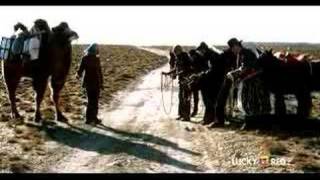
Tuya is the persevering wife of Bater, a herdsman who lost his legs exploring water in the Neimenggu (Inner Mongolia) grassland that is fast vanishing as a result of desertification. She takes up the sole responsibility to make a living for the family, but develops a dislocated lumbar from her hard labor and risks paralysis herself. Faced with harsh reality, the couple decide to divorce so that Tuya can seek a better life. Imposing her own conditions of a remarriage - her new husband must take care of Bater, their children and their poor herding land, the strong-minded, stubborn, but also gentle, susceptible Tuya embarks on an arduous search for a new husband, and meets suiters who are rich but disingenuous, likable but shy, and saves a suicidal Bater who still longs for Tuya and their children along the way.
More




Tuya de hun shi (2006) Reviews
Almost a documentary
This movie is more meaningful when viewed as a semi-documentary. Through the micro angle of a slightly dramatized story of Tuya, we are introduced to the macro reality of the harsh livelihood of the backward areas of Mongolia and, although not specifically addressed, of many parts of China. Tuya's predicaments are by no means unique, or even unusual, for there are many areas in the mainland where natural resources that we in modern cities take for granted are luxuries. With her husband paralyzed as a result of attempts to drill wells for water, Tuya, relatively young, reasonably good looking and unquestionably able-bodied, takes up the burden of rearing a herd if lambs and caring for her husband and two children. The son, just about turning teen, is a help but the daughter is small. When the burden comes close to being unbearable, the couple resorts to what a lot of people in similarly locations under similar situations do. The have a divorce, and the wife looks for an opportunity for re-marrying, to a man capable of taking care of the children. In Tuya's case, there is another condition: the suitor must undertake to take in the paralyzed ex-husband. The story, as the title suggests, revolves around the events leading to Tuya's marriage, or re-marriage. The events unfold in as natural a manner as can be presented in a movie. There are moments of both farce and pathos, but none is contrived. You can believe that this is exactly the way things would happen. YU Nan who plays Tuya is a marvelous actress. All the other key characters are real local people, using their real names in the movie, but I am not sure whether they are indeed acting out their own story. "Tuya' marriage" won the Golden Berlin Bear earlier this year, a last-minute entry in the competition and a surprise winner.
Definitely worth a Berlin Golden Bear
Tuya' marriage is among one of the most successful attempts by China's sixth-generation directors to make a good film. Other equally successful ones included the Beijing Bicycle, the Little Red Flowers, etc, which were all made by film directors not quite familiar to Western viewers --- at least not as known as big names like Zhang Yimou. The film is so real to life and depicts the life on the vast lands of Inner Mongolia so well, that it reminds me of my piecemeal impressions gathered during my trip to Inner Mongolia six years ago --- people were impoverished but so kind, materially backward but spiritually advanced, and the traditional way of life is preserved well. Yu Nan's performance is really amazing. The plot is so moving and touching that at some points I felt so much involved as to worry about Sengge's death through drilling. This is a new kind of experience even for Han Chinese to learn about the Mongolian life, and I hope it can be the same kind of revealing experience for audience in the West to understand the ethnic diversity in China --- Mongolians live harmoniously with Han Chinese in the same country called "China", just as it is the case with the other 55 minorities, including Tibetans. In a nutshell --- Tuya's Marriage indeed deserves the Golden Bear at Berlinale, be it in essence or in name.
Great movie, but why not in Mongolian?
I just finished watching Tuya's marriage at the Berlin Film Festival and would rate it 8/10. The movie deals with a herder woman in Inner Mongolia who decides to divorce because her husband is sick and unable to care for her and the family. Since she still loves him, any prospective new husband must promise to care for her and the kids as well as for her old husband. The plot may sound a bit constructed, but it actually works remarkably well. The pictures are great, and after D. Byambasuren's rather static movies this is finally a drama set in the steppes. The most important thing is probably that the movie takes its subjects seriously. Maybe a bit too seriously at times, but not that seriously that it disturbs the movie. So, why not giving it 10/10? I missed the Mongolian language. Of course language isn't everything (see Mongolian Pingpong or Apocalypto), but when even the drinking habits are dealt with in greatest detail, why didn't they bother to find a cast that can speak Mongolian? I asked the director about why they used Chinese (that's what you go on film festivals for), but his answer was not really convincing. I suppose some opportunistic reason, like the main actress can't speak Mongolian. Anyway, this only means that you can as well enjoy this movie in a dubbed version. In short: Definitely recommended.
Exotic
This is an exotic film that recalls other indigenous Mongolian tales by Byambasuren Davaa such as The Story of the Weeping Camel (2003) or The Cave of the Yellow Dog (2005). It also has much in common with the Tibetan film Himalaya (1999) and rural Iranian cinema. The story, like that in each of these other films, is very simple - a woman's husband is incapacitated and she seeks a new man who will support the old. The cinematography is beautiful with the harshness of the inner Mongolian landscape captured aesthetically. Dialogue is sparse, and the film is very observational, documenting a way of life that is gradually receding into the past. The herding and riding of animals, the digging of wells, the visits from potential suitors and other aspects of rural life are nicely captured, and contrast against the oncoming tide of modernity. Thematically, the film has more in common with Breaking the Waves (1996), my favourite Lars von Trier film. There is both humour and heartbreak as the story unfolds. I didn't find the film quite as effective as Weeping Camel but a nice bit of cultural diversity that's worth seeing.
the main protagonist is a woman
One of he most interesting films from chines mainland. There are no stunt fights, no killings. This is a human story with human complexities and how a strong woman tries to solve her problem. He enduring love and affections for her disabled husband and her children constitute the main theme. In the background there is another actor, THE LANDSCAPE. Even though the steppe land with brushes and those mountains are harsh to the inhabitants, on screen it looks breathtaking. The film shows how women were doing back-breaking chores(literally in this case) for ages for which man has to be thankful and gracious to her. An absorbing film to watch.