
VidMate
Free YouTube video & music downloader

ACTOR
Margita GoshevaIvan BarnevIvan SavovStefan Denolyubov
DIRECTOR
Kristina Grozeva,Petar Valchanov
SYNOPSICS
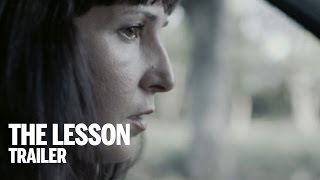
Urok (2014) is a Bulgarian,English movie. Kristina Grozeva,Petar Valchanov has directed this movie. Margita Gosheva,Ivan Barnev,Ivan Savov,Stefan Denolyubov are the starring of this movie. It was released in 2014. Urok (2014) is considered one of the best Drama movie in India and around the world.
In a small Bulgarian town Nadezhda, a young teacher, is looking for the robber in her class so she can teach him a lesson about right and wrong. But when she gets in debt to loan sharks, can she find the right way out herself?
Urok (2014) Trailers
Same Actors


Urok (2014) Reviews
A drama of a schoolteacher heroine in a valueless post-communist state
THE LESSON is one of the mini-budget films (this one from Bulgaria) that packs a solid wallop in story without all the fancy trappings and star studded cast of the big budget films that focus on CGI, noise, and paranormal themes. Kristina Grozeva and Petar Valchanov both wrote and directed this film, a work of cinematic expression that is gaining honors wherever it is shown –and for good reasons. And once again we are indebted to Film Movement for taking up the banner for this worthy film. In a small Bulgarian town Nadezhda (Margita Gosheva), a young teacher, is looking for the culprit of an innocent child-theft between classmates in her class so she can teach him a lesson about right and wrong. But when she gets in debt to loan sharks, can she find the right way out herself? Nade is an honest, hard-working elementary school teacher struggling to keep her life together. With the home she shares with her husband and young daughter on the brink of repossession and no money to her name Nade resorts to measures her former self, untouched by the realities of economic desperation and moral compromise, would have found depraved, as she makes one last extreme effort to secure the money she needs. The film moves slowly, allowing the viewer to absorb all the subtle statements about life in a post-communist state. It is a moment of examining the strength of women and schoolteachers that is wholly universal. The actress Margita Gosheva is astonishing fine in the manner in which she portrays this scrupulously honest woman who faces more obstacles that most. She makes Nade credible and lovable. This is a very strong film that deserves a wide audience.
Excellent, subtle, truthful
This is extraordinarily good film-making aimed at an intelligent audience. The plot revolves around an ordinary woman who undergoes a banal yet tremendous crisis alone, left to her own devices, without a helping hand. In a sense it is the story of most women, mothers, unrecognized heroes who make the magic illusion of a normal life happen for their children in a dog eat dog world. The main actress is splendid as she portrays a rather restrained, generic middle school teacher who has certain fixed ideas about what is correct and honorable. Sudden danger to the core of her family puts her through a series of trials which force her, and us, to examine easy assumptions about honor and behavior.
TIFF 2014: The Lesson/www.nightfilmreviews.com
Anything that can go wrong, WILL go wrong! An epigram for tragedy when it strikes on a seemingly constant basis, Murphy's Law can be appropriately applied to many scenarios in life when things seem to never go right. Simply and subtly, the country of Bulgaria transcends the adage into a piece of fine cinema that is The Lesson. Held together by an impressive lead Nade (Margita Gosheva), The Lesson is a sturdy little micro- budget film about the financial hardships of rural Bulgaria and the daily struggle undertaken by the population to stay safely nestled in their homes and off the streets. The Lesson begins and ends in Nade's classroom to be exact. Nade is a schoolteacher who begins her newest lesson trying to catch the culprit of an innocent child-theft between classmates; someone has stolen their classmate's wallet. Nade is intent on finding the thief and teaching them a lesson, fearing that this behaviour will transcend into the culprit's adult life and lead to more severe consequences. One of the first, if not only things we need to know about Nade is that she is an honest schoolteacher who has a deep-rooted moral and ethical compass. Times are tough for Nade, her husband and young daughter. Barely able to afford bus fare, she arrives home one day to discover money that should have gone towards their debt has been sunk into repairs for a gearbox for a trailer her husband has repeatedly failed to sell. We learn later that this trailer doesn't just take up a seemingly permanent space on their front lawn, but acts as a metaphorical barrier between the family and the rest of the world. Tasked to make good on their debts within three days or face seeing her families worldly possessions on the auction block, Nade sets aside her better judgement and gets into business with some shady individuals to try to pay the money back, hoping to return order to her household and family life in the process. When Nade's seemingly ordinary life couldn't seem to be getting any worse, directors Kristina Grozeva and Petar Valchanov take the very square lens of their camera, set against the rigid frames of doorways, window panes and hallways and show the reshuffled chaos entering the life of a hard-working member of a small town. Shot exceptionally well despite its lack of funding, The Lesson is a reminder that films don't need much money to look good. Adopting a quality over quantity approach, the film is a slow-burning, almost documentary-type account of the real-life tragedy that could easily plague anyone in a world of economic uncertainty. The true star of the film is Nade, the lead played in a calm and collected manner by Margita Gosheva. Gosheva is the film's heart, soul and patience who allows for audiences to engage for as long as possible, without ever wanting to doze off. Her interpretation of Nade is a very grungy and stripped one of a very overwhelmed character; who even in the face of homelessness and threats of blackmail never sidelines her ego and pride. We come to learn that Nade's integrity is the real star of The Lesson. What's most refreshing about the film is it's ability to write a strong female character that doesn't need to wear a cape or conquer otherworldly elements to be the glue that holds the film together. Although she never breaks down in tears, Gosheva's subtle trembling body is enough for us to physically feel the emotional toll the situation is taking on her character. Gosheva has an uncanny ability to force audiences to empathize with her during moments of complete strain and grit, although finds solace and peace while in her classroom–highlighting the stark differences in her acting abilities quite well on a moments notice. Thankfully, in a very obvious yet equally poignant last few frames, the film allows the world of Nade's shaken life to come full circle in ways she never thought possible. The lesson at hand transforms Nade's quest for clarity into a much greater journey of understanding, self-discovery and compassion that Nade will take with her for the rest of her life. It is these last delicate and quaint commentaries that allow The Lesson to be a film that we might not want to revisit anytime soon but a lecture in film-making we won't soon forget.
Survival and womanhood in a post-totalitarian realm
"The Lesson" has recently received acclaim of almost poignant proportions, empathising with the drama of the schoolteacher heroine in a valueless post-communist state. Being Bulgarian, I can attest to the dramatic existence of teachers here, and would reiterate the fact the film is based on a true story. While the meager pay and monstrosity of society, hence youth's behaviour, is enough to drive one insane, I feel there's a fact which the film treats leniently, and in my eyes, illogically. The pillar of the family, teacher Nadya, is successful in keeping things together (even if unpaid for the side job she does) - until her house is broken into by debt collectors due to her husband skipping monthly payments, while misinforming her all had been fine. Whether she should have confronted him might be debatable, if holding spousal loyalty on a pedestal (which is in my opinion exactly what the film does), yet it is astonishing she should unquestionably take it all upon herself to fix the situation; if that is not enough, her junky-camper-enthusiast husband (far more detracted than, say, Jim Broadbent in Life Is Sweet) scolds her when he finds out she had resorted to a loan shark. The real tragedy the film conveys is that of, I dare say, the average Bulgarian woman who stoically puts up with the often good-for-nothing drunk or slacker husband, because... (here steps the lack of logic, and the lack of questioning by the audiences in Bulgaria). In the real-life story, the teacher had even won a Green card, and had everything ready in order to depart, when the husband got into a drunk-drive accident, nearly killing a passenger. The real heroine is apparently still dragging him on, while having made yet another relative success of her life, now in France. (She had got a 18-month suspended sentence for her crime.) Inadvertently, this film is a testimony of patriarchal post-Ottoman morals, superimposed with the post-Soviet narrative of a woman as crane-operator, or other industrial hero who is also head of the family and pillar of society (after the Mother Russia mythologem) - here being forced to disintegrate. Even statistics beat the myth, with Bulgaria nearing the bottom of worldwide birth rate's table, with war-torn countries above us. The acting of Margita Gosheva is superb if schematic (and her resemblance of the real-life heroine amazing), due to either storytelling shortcomings or intention. I agree with the NY Times reviewer that the story might have been more vivid and character-driven: we still are clueless as to Nadya's emotional landscape, as if it should not even be our concern. For generations, Bulgarians have been raised by being sworn to secrecy and the stiff-upper-lip, while having also been taught obedience: potentially an explosive character mix, which however tends to implode; a process the film registers. We cannot but admire the tight-lipped portrayal of survival-genius overtaking the heroine's inherent femininity. (For an introspection to womanhood, see Margita Gosheva's equally impressive previous role in Three Days in Sarajevo.) My review might be slightly unappreciative, while the filmmakers' intent at a humorous approach to the otherwise gritty story justifies the schematism/intellectual detachment, and is both refreshing and admirable.
Intense & Powerful Bulgarian Film
This intense and powerful Bulgarian drama proved to be a most pleasant surprise. It's filled with dark twists and turns, and kept me in suspense to the final scenes as to how this would all turn out. Margita Gosheva is terrific here as Nade, a no-nonsense teacher of English at a Bulgarian school. She's living with her no-goodnik husband Mladen and her adorable 4-year-old daughter Andrea. After trying to deal with a suspected thief in her classroom, Nade returns home, one day, to find a court officer there, who advises her that due to non-payment of their mortgage there will be an auction of their house in 3 days, unless they can come up with all the arrearages by then. Nade is shocked and eventually finds out from her husband that he bought a gear box for their camper and never paid their mortgage payments. This will set off a series of events that just get wilder and darker, as the desperate Nade tries to raise the cash to save her house. At times, watching these events I was riveted to the screen, while at the same time feeling infuriated at how some of them played out. The movie is most ably written and directed by Bulgarian filmmakers Kristina Grozeva and Petar Valchanov, and along with some fine realistic acting by the cast, led by Gosheva, I thought this was one of those gems that you find every so often.